Love, Alzheimer’s and the Support of Adult Day Services

On Valentine’s Day, Frank Zielinski couldn’t wait to get to dinner.
He and his wife of nearly 49 years, Connie, arrived at a quiet room at Concordia at Cabot’s Adult Day Services program. A small table was set with a white tablecloth and candles. There was a heart-shaped cake, a small bottle of champagne, a delicious dinner with two roses. For a moment, it felt like Valentine’s Days from years ago – before Alzheimer’s changed the rhythm of their lives.
“It meant a lot,” Frank said. “Holidays aren’t the same anymore. But Concordia made it special.”
For Frank and Connie, love has endured through nearly five decades of marriage, raising three children and navigating life’s unexpected turns. Today, that love looks different – shaped by caregiving and the daily decision to keep moving forward together.
A Love Story That Began with a Drum Corps
Frank met Connie when she was a majorette in a Moose Lodge Legion Lanters baton corps. He was the bus driver for the group.

“One thing turned into another,” he said with a smile.
They married and started a life together, eventually moving to Virginia for 36 years while building their careers and raising their children – Stacy, Rebecca and their son Timothy, who has Down syndrome.
Connie had a successful career as a vice president of a mortgage company. Frank worked as a regional consultant in the healthcare industry, traveling the East Coast conducting inspections for long-term care facilities.
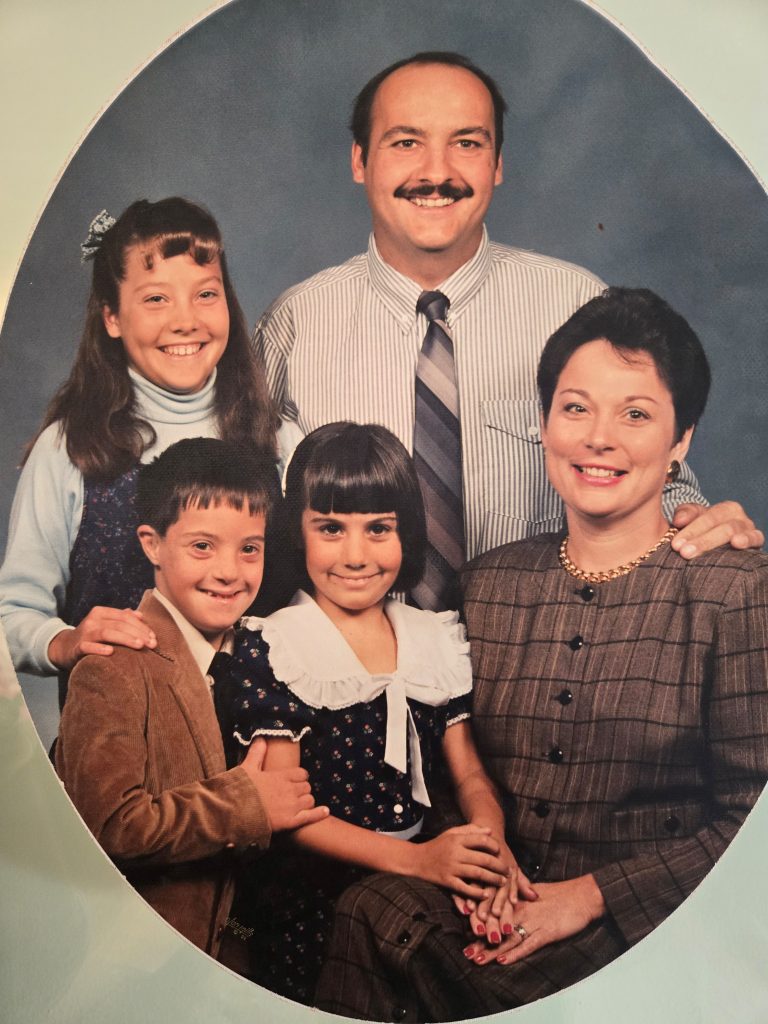
After decades away, they returned to Pennsylvania to help care for Connie’s parents, who both had dementia. Her father has since passed, but her mother lives at Concordia’s standalone memory care facility, Concordia of Fox Chapel.
Then, in 2018, their lives changed when Connie was diagnosed with early-onset Alzheimer’s disease at age 59.
“It just hits,” Frank said. “You think everything’s going to be fine. Your kids are grown and gone. And then all of a sudden, life changes.”
Related: The Stages of Alzheimer’s Disease: What to Expect and How Memory Care Can Help
When Love Becomes Caregiving
Today, Frank is Connie’s primary caregiver. He also supports Timothy, who lives at home and, at 45, is high functioning and independent in many ways. Still, managing a household where two family members require varying levels of support takes patience and structure.
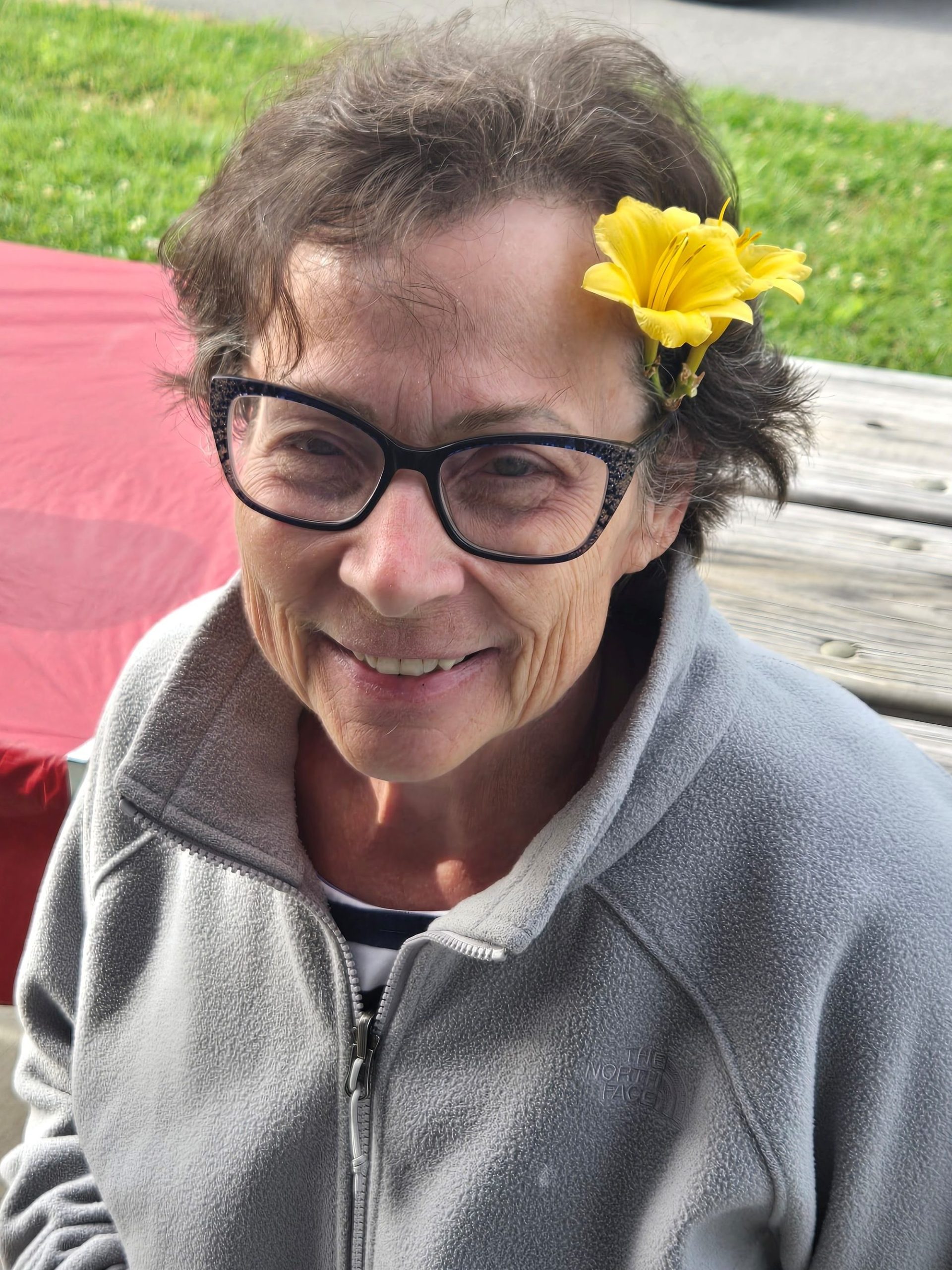
Frank wakes early for a quiet cup of coffee before the day begins. By midmorning, he is helping Connie dress, bathe and start her routine.
“Probably the hardest part is having a 67-year-old spouse who relates to an 8-year-old child,” he said. “You can’t remember how it used to be. You have to deal with what’s happening now.”
Alzheimer’s has changed their conversations and their everyday interactions, like many families who face forms of dementia. Loved ones are still physically present, but the relationship shifts in ways that are difficult to explain to those who have not experienced it.
Frank offers simple advice to other caregivers navigating a new diagnosis: “Don’t get frustrated. You have to have patience.”
Finding Support Through Adult Day Services
About a year ago, Frank began researching options that would give Connie social interaction in a safe, structured setting while also giving him peace of mind.
“I knew she needed something to keep her active and social,” he said.
His search led him to Concordia at Cabot’s Adult Day Services program. Licensed by the Department of Aging, the program provides a safe and secure environment for adults with physical limitations or diminished reasoning skills, including Alzheimer’s-type diseases.
Participants benefit from ongoing evaluations, medical oversight by an on-site nurse, nutritious meals and snacks, daily activities and exercise classes and more. A variety of therapies designed specifically for individuals with Alzheimer’s are also incorporated into the routine.
Related: How Concordia’s Adult Day Services Make a Difference
Frank and Connie toured the program together.
“Ever since then, she just loves it,” he said.
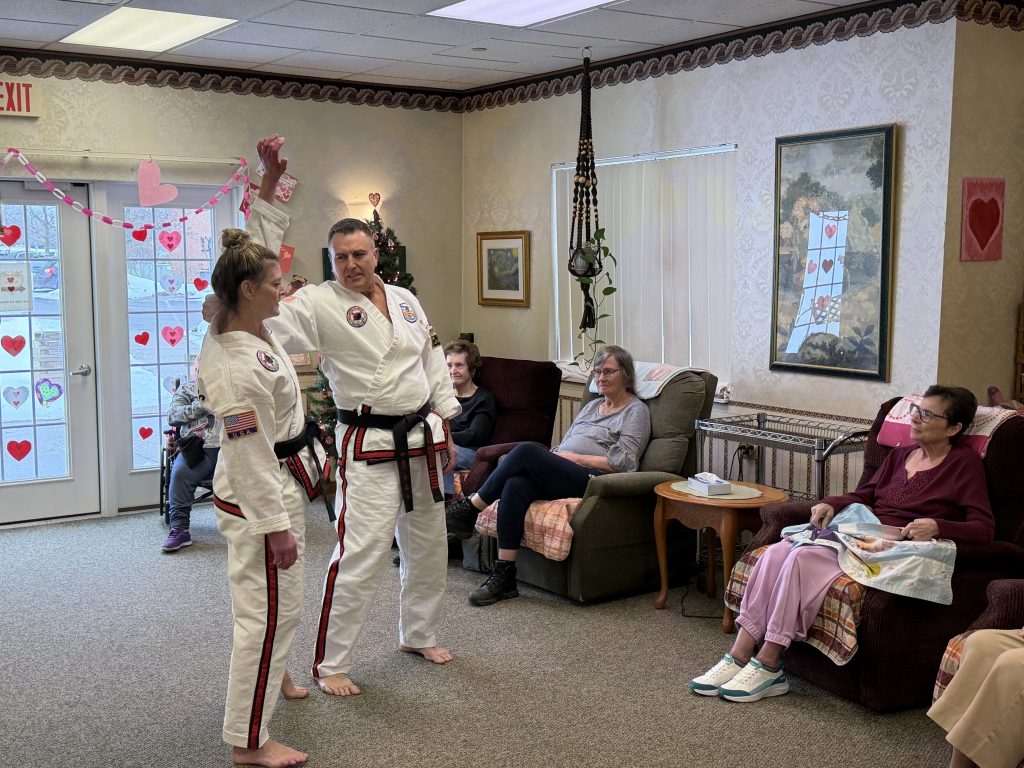
Connie now attends Adult Day Services on Tuesdays and Thursdays. When Frank talks to her about going, he frames it simply.
“I tell her she’s going to see her friends and have lunch,” he said.
When they walk through the doors, staff greet her warmly.
“They all say, ‘Connie!’ and she lights up,” Frank said. “That makes me feel good.”
For Connie, the program provides stimulation, activity and connection. She loves to dance – a passion that dates back to her days as a majorette – and staff make sure she has opportunities to move and enjoy music.
Even after breaking her femur over Christmas and receiving Concordia’s short-term rehabilitation care, Connie returned to dancing when she heard live music in the building.
“She’s dancing down the hall,” Frank recalled. “I said, ‘You have three pins in your hip.’ But she loves it.”

For Frank, Adult Day Services provides something equally important: peace of mind.
“It’s a safe environment,” he said. “I don’t have to worry about her falling or tripping. It gives me time to schedule my doctor’s appointments, go to the grocery store and take care of things I need to do.”
Adult Day Services also supports caregivers directly. Specialists are available for consultation, and a free Caregiver Support Group meets on the second Tuesday of each month at 2 p.m. at Concordia at Cabot. The group is open to the community and offers encouragement and shared experience for those caring for loved ones with dementia.
For many families, programs like Adult Day Services serve as essential respite care – helping caregivers sustain their own health while keeping loved ones safe, engaged and active.
A Quiet Valentine’s Moment
That is why the Valentine’s dinner meant so much.
In the middle of medical routines and daily structure, Frank and Connie were able to sit together at a candlelit table, just the two of them.
“It made me feel good,” Frank said. “They treat her so nice at Concordia.”
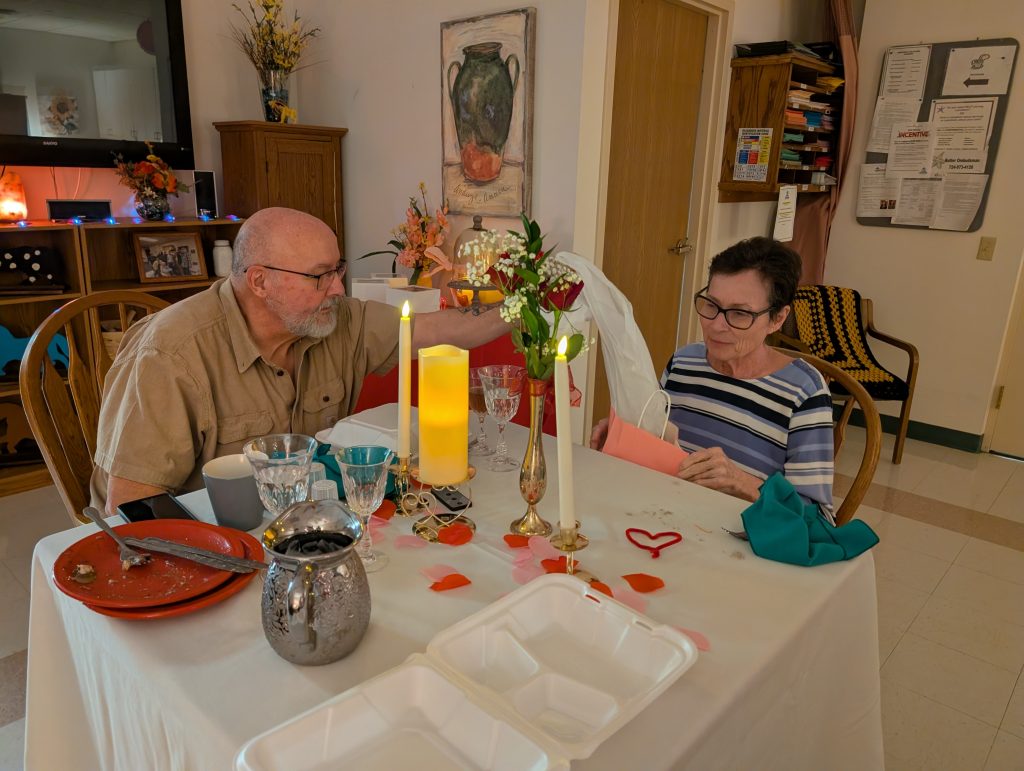
Alzheimer’s has changed what holidays look like in their home. Frank still decorates because Connie always did. He still marks special occasions for Timothy. But he admits it feels different now.
“It’s just another day sometimes,” he said.
Still, the love that began nearly five decades ago remains. Frank is committed to keeping Connie at home for as long as possible, supported by services that help her continue living a meaningful life.
“I want her to live a substantial life,” he said.
You Don’t Have to Do This Alone
Caring for a spouse with Alzheimer’s can feel isolating, overwhelming and emotionally complex. But families in Cabot and surrounding communities have options.
Concordia offers inpatient memory care services at five locations: Concordia at Arbutus Park, Concordia of Bridgeville, Concordia of Fox Chapel, Concordia at Villa St. Joseph and Concordia of the South Hills.
Related: Caring for Your Brain and the Pros to Memory Care
Concordia at Cabot’s Adult Day Services program operates Monday through Friday from 8 a.m. to 6 p.m., with full-day, half-day and extended-day options available. The program is designed to support both participants and caregivers through structured care, therapeutic activities and community connection.
For Frank, the program has made a difference – not by replacing his role as caregiver, but by strengthening it.
“You just have to be patient,” he said. “And keep going.”
For more information about Adult Day Services or to schedule a personal tour, call 724-352-1571, ext. 8271.
Founded in 1881, Concordia Lutheran Ministries is a faith-based, CARF-accredited Aging Services Network and recipient of the inaugural Pennsylvania Department of Aging Excellence in Quality Care Award. As one of the largest nonprofit senior care providers in the country, the organization serves 50,000 people annually through in-home care and inpatient locations. Concordia offers a lifetime continuum of care that includes adult day services, home health care, hospice, physician and rehabilitation services, memory care, personal care, assisted living, respite care, retirement living, skilled nursing/short-term rehab, spiritual care and medical equipment.
Get Updates From Concordia
There is always a LOT happening at Concordia! Would you like to stay up-to-date with our news and events? Sign up for our monthly e-newsletter here.